Add your promotional text...

Waste in Airline Catering Starts Before Production
Waste in Production is a visible symptom that has its roots in many other functions of the Cateriing process.
AIRLINE CATERINGCATERINGCATERING PROCUREMENTAIRLINE CATERING SUBSTITUTIONS
5/11/20264 min read
Waste in Airline Catering Starts Before Production
In airline catering, waste is often treated as a production problem.
But in many operations, waste starts much earlier in the process.
It starts in the forecast, the menu plan, the purchasing decisions, and the way late changes are managed. By the time waste becomes visible in the kitchen, tray setup, dishwash, or returned carts, the real cause may already have occurred.
For airline catering senior leadership teams, this matters because waste is not only a sustainability issue. It is a profitability issue.
Every unnecessary ingredient, overproduced meal, excess stock item, and repeated task has a cost attached to it. At scale, these costs quietly reduce margin.
Waste is rarely caused by one department
Airline catering is an operational system built on connected teams, processes, and decisions.
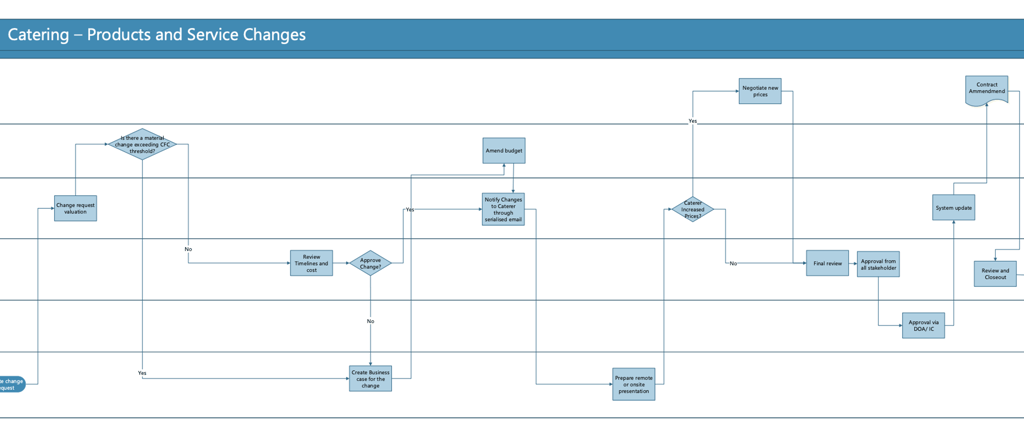
Forecasting affects purchasing. Purchasing affects production. Menu design affects labour. Production planning affects logistics. Last-minute changes affect almost everything.
When these functions are not aligned, waste becomes a problem.
Not because teams are careless. Not because people are not working hard. But because the system creates waste before the operation has a chance to control it.
A production team may be blamed for overproduction, but they may have been working from an unreliable forecast. A purchasing team may be blamed for excess stock, but they may have been compensating for unclear demand. A kitchen team may be blamed for inefficiency, but the menu may have been designed without enough attention to complexity.
This is why reducing waste requires better alignment across the full catering process.
Forecasting is where many waste problems begin
Forecasting is one of the most important cost-control levers in airline catering.
If the forecast is inaccurate, late, or disconnected from production planning, the operation often responds by adding buffers: extra stock, extra meals, additional preparation, and more safety margin.
Each buffer may seem reasonable. But across thousands of meals, flights, and menu cycles, these small adjustments become significant material waste.
Airline catering will always face passenger changes, aircraft swaps, flight delays, schedule updates, and last-minute requests. The goal is not perfect forecasting. The goal is to build a planning system that can absorb variability without turning every change into waste.
Menu design has a direct impact on waste
Menu decisions influence waste before anything is produced.
A menu may look attractive from a passenger or commercial perspective but create unnecessary complexity in the operation.
Unique ingredients can increase purchasing risk. Low-volume items can increase stock exposure. Multiple variations can increase production errors. Manual steps can increase labour and handling. Poor portion design can increase inconsistency and overproduction.
This does not mean menus should be simplified at the expense of quality. It means menu design should be connected to operational reality.
A strong menu is not only one that looks good onboard. It is one that can be forecasted, purchased, produced, packed, delivered, and controlled consistently.
Purchasing must be connected to real demand
Purchasing is often evaluated through price, supplier terms, availability, and quality.
But a low unit price does not create value if the product expires before use. A supplier agreement does not help if minimum order quantities create excess inventory. A product specification may look efficient commercially but create complexity in production.
This is why purchasing should not sit separately from forecasting and production planning.
Better alignment helps purchasing teams order closer to operational need, reduce obsolete stock, manage substitutions earlier, and support menu decisions with real cost and usage data.
Waste is not always visible in the purchase price. It may be hidden in inventory ageing, emergency orders, disposal, rework, and additional labour.
Production is where waste becomes visible
Production is often where waste is seen, measured, and discussed.
But production is not always where waste starts.
If demand is unclear, production adds a buffer. If menus are complex, production adds time and stock. If purchasing substitutions arrive late, production adjusts under pressure. If last-minute changes are frequent, teams build protection into the system.
This is why waste reduction cannot rely only on production discipline.
Standard work, portion control, batch control, and supervisor routines remain important. However, waste reporting should be positioned as a tool for improvement, not as a reflection of individual or management performance. When teams feel comfortable reporting waste openly, leaders can better identify the true source of the issue, including possible upstream causes in forecasting, purchasing, menu design, or planning.
The strongest catering operations connect planning decisions with production reality. They do not simply ask, “How much did we waste?” They ask, “Why was this waste created?”
The leadership issue: alignment
For senior airline catering leaders, the opportunity is not only to reduce waste at the end of the process. The opportunity is to prevent waste from being created.
That requires alignment between forecasting, menu design, purchasing, and production.
Forecasting asks whether demand signals are accurate, timely, and shared with the right teams. Menu design asks whether menus are evaluated for operational complexity as well as passenger experience. Purchasing asks whether buying decisions are linked to forecast, menu cycle, production capability, and inventory risk. Production asks whether teams are planning from reliable information or compensating for uncertainty.
When these areas are aligned, material waste decreases. Rework decreases. Inventory becomes cleaner. Production planning improves. Labour is used more effectively. Last-minute changes become easier to absorb.
This is margin protection.
Conclusion
Waste in airline catering often starts before production.
It is frequently created by disconnects across the full supply chain: forecasts that are not translated into operational plans, menus that exceed production capability, purchasing that is not aligned with actual demand, and production teams receiving late or incomplete information. Last-minute changes should also be recognised as predictable variability, not treated as isolated exceptions.
The strongest catering operations do not only manage waste after it appears. They design systems that prevent waste from being created.
Waste reduction is not just about throwing away less. It is about planning better, buying smarter, producing with more control, and protecting margin.