Add your promotional text...
When Supply Shortages Become an Inflight Premium Service Problem in Airline Catering
Substitution of products in airline catering are damaging the brand. In airline catering, premium service failures rarely begin in the cabin. More often, they start much earlier, in the supply chain, where shortages, substitutions, and last-minute decisions quietly shape the passenger experience.
AIRLINE CATERING SUBSTITUTIONSAIRLINE CATERING PROCUREMENT
Andrew Caines
4/13/20262 min read
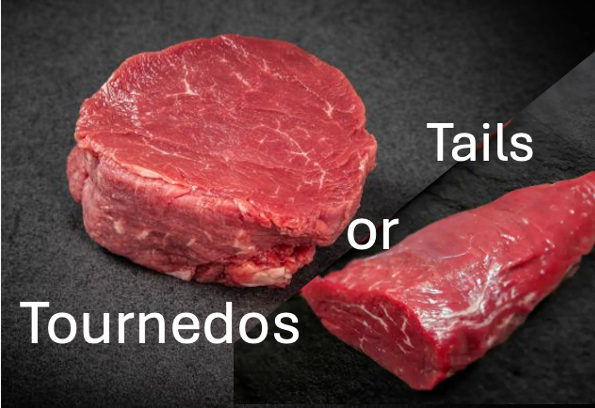
Shortages are part of operational reality. Delays happen. Premium SKUs become unavailable. Specifications change. In response, many catering units default to the simplest solution: substitute what is missing with whatever is available and keep production moving.
Operationally, that may solve the immediate problem.
Commercially, it often creates a bigger one.
The issue is not the shortage itself. The issue is what happens next.
An economy-class dessert replaced with a comparable option may be manageable. A business-class item replaced with something visibly inferior is not a minor adjustment. It is a breakdown in process. When substitutions are handled without clear rules, premium service becomes inconsistent, cabin crew are forced to improvise, and passengers notice the gap between what was promised and what was delivered.
The real question for airline caterers is not, “Do we have the product?”
It is, “Do we have a process that protects the passenger experience when we do not?”
We recently reviewed an operation facing recurring shortages on premium items due to the actual situation in Middle East. Their approach was straightforward: if a product was unavailable, the team substituted with an option provided by procurement. From a production perspective, the line kept moving. From a service perspective, the results were damaging.
Business-class passengers were receiving inconsistent experiences. Cabin crew had to make on-the-spot decisions. Complaints were increasing. The operation viewed the issue as a supply chain problem, but the deeper cause was different: there was no substitution logic.
There was no hierarchy of acceptable alternatives. No differentiation between cabin classes. No escalation rules for critical items. No structured alignment between procurement, production, and service priorities.
The answer was not to “fix the supply” first.
The answer was to redesign the process.
By introducing structured substitution rules, clear decision frameworks, and stronger alignment between procurement and production, the operation was able to improve premium consistency, reduce crew intervention, and lower customer complaints. The shortages did not disappear. But the outcome became controlled.
That is the difference high-performing operations understand.
They do not assume shortages can always be prevented. They build processes that protect the service standard when disruption occurs.
In premium airline catering, availability matters. But process discipline matters just as much. A catering operation that depends on perfect supply conditions is fragile. A catering operation with clear substitution governance is resilient.
For premium service, resilience is what protects the brand.
The most effective substitution processes usually include three things:
1. A hierarchy of acceptable alternatives
Not every replacement carries the same impact. Teams need pre-defined options ranked by suitability, not availability alone.
2. Differentiation by cabin class
What may be acceptable in one cabin may be completely unacceptable in another. Substitution rules should reflect the service promise attached to each class.
3. Escalation rules for critical items
Some items should never be substituted without approval. Clear escalation paths prevent frontline teams from making high-risk decisions under pressure.
This is why the conversation around premium service should not stop at supply shortages. The stronger question is whether the operating model is designed to absorb disruption without downgrading the passenger experience.
Because shortages are inevitable.
Uncontrolled substitutions are not.
For airline caterers focused on premium service, the priority should not only be securing 100% availability. It should be designing a process that preserves consistency, protects the brand promise, and gives teams a clear framework for decision-making when supply gaps occur.
That is how premium operations move from reacting to shortages to controlling the outcome.
If your operation is facing recurring shortages on premium items, Altair can help you review your substitution process, decision logic, and cross-functional alignment to protect the passenger experience.